My Rest & Reset Mornings: What 20 Minutes With a Journal Taught Me This Summer
By Aimee Urdiales | U-Ed Collaborative

My new morning ritual!
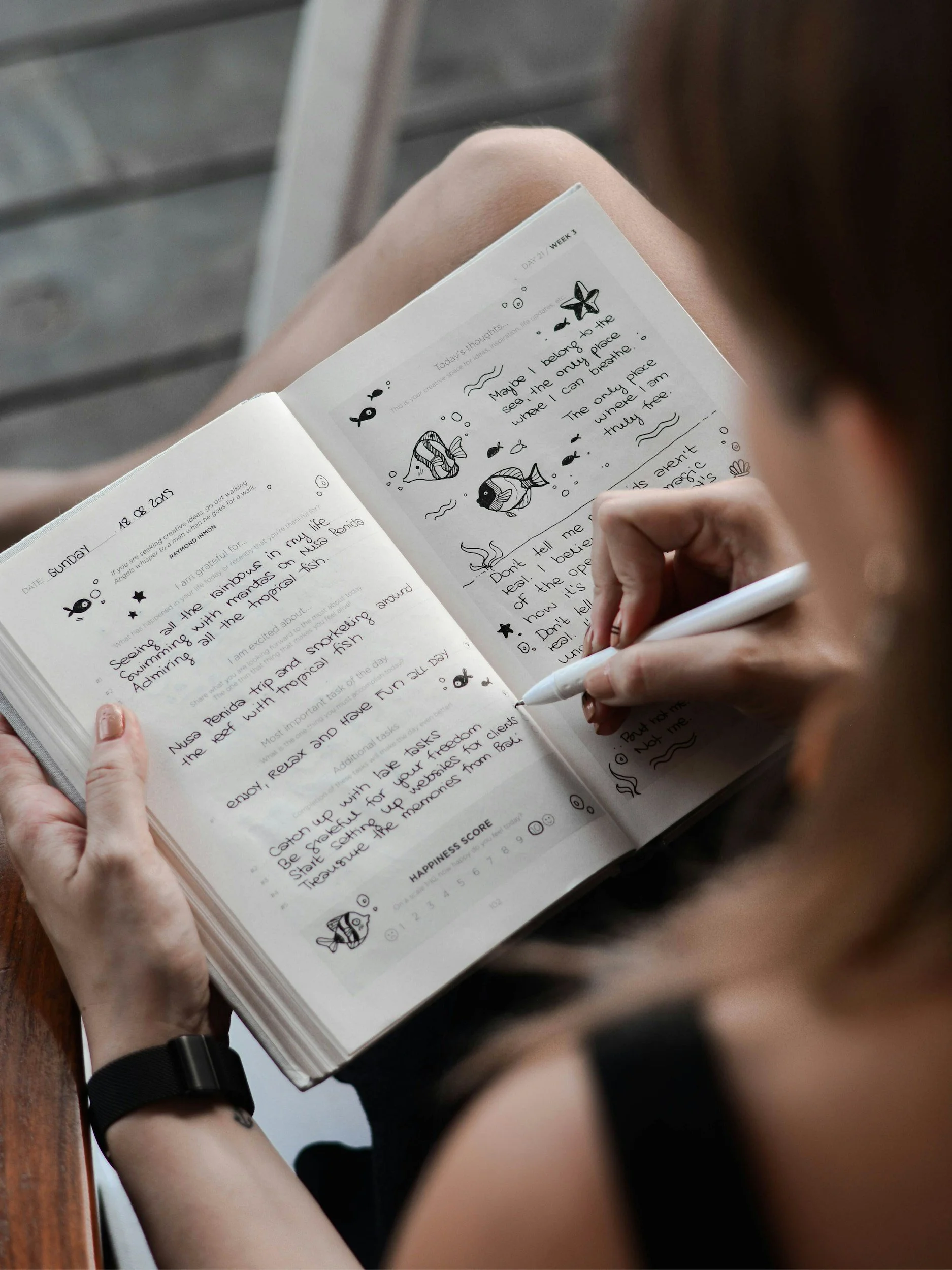
There's a specific chair I sit in every morning right now. It's on my porch, if the air is cool enough — the kitchen counter if it's not. There's always coffee. There's always the same worn journal, the pages starting to curl a little at the corner from my hand resting on them.
And for fifteen, maybe twenty minutes, I don’t do anything else.
I didn’t plan this. It sort of found me in June, in that first stretch of summer when I wasn’t sure what to do with my own quiet. I’ve journaled on and off for years — the kind where you buy a beautiful notebook in September and it’s blank by October. But this summer, for whatever reason, it stuck. Every morning. No exceptions, no guilt if I miss a day.
What I actually write about
Nothing profound, most days. Some mornings it’s just: slept until 7, felt so good. Other mornings it’s longer — what’s actually on my mind, what I’m looking forward to, what’s still nagging at me from the school year that I haven’t quite let go of yet. A few weeks ago I wrote an entire page about how weird it felt to walk past the back-to-school display at Target and feel my stomach drop, before I even had coffee in me. Writing it down took the edge off it. It just — became a sentence on a page instead of a spiral in my head.
Some mornings the prompt I give myself is simple: what do I need today? And I let myself actually answer it, instead of skipping straight to what I need to get done.

Just 20 minutes a day!
The Beach Chair Test
I took a week at the beach this summer, and I made myself a rule before I even packed: three hours of work, one day, the whole week. That’s it. I wrote that rule down in my journal the morning before we left, actually — partly so I’d hold myself to it. And I did. I sat in a beach chair with a book that had nothing to do with education, and when that little internal voice started up — shouldn’t you be doing something — I could look back at what I’d written and remember: this is the plan. This is allowed.
That’s the part journaling has done for me that I didn’t expect. It’s not really about the writing. It’s about having a place to put things down so they’re not just circling in my head all day, showing up uninvited while I’m supposed to be resting.
How R.E.S.T. shows up on the page
If you caught this week’s episode, you already know my R.E.S.T. framework — Recover, Explore, Slow Prep, Transition. What I didn’t realize until I started flipping back through weeks of entries is that my own summer followed it almost exactly, page by page.
R is for Recover, and my June entries prove it. Most of them are one line long: slept in, sat on the porch, read for two hours, did nothing. No goals, no plans — just recovery, written down so I’d remember I actually let myself do it.
E is for Explore, and that’s where the entries got longer and lighter — the beach week, an afternoon spent trying a new recipe for no reason other than it looked fun, a page about a friend’s visit that had nothing to do with anything productive at all. The Explore entries are the ones with exclamation points in them.
S is for Slow Prep, and I can pinpoint the exact morning mine started — a Tuesday in late July, when my journal prompt shifted from what do I need today to what’s one thing I’m excited to try this year. That’s the whole entry. It didn’t feel like work. It felt like curiosity, which is exactly the test I mentioned on the podcast: if it feels good, you’re in the right window.
T is for Transition, and my most recent pages are full of it — small notes about shifting my bedtime back, a walkthrough of my classroom, three words I want to carry into the year instead of a ten-item goal list.
Reading it all back together, the framework wasn’t something I imposed on my summer. It’s just what naturally happened once I gave myself permission to actually rest. The journal just happened to catch it as it went.
Made just for teachers
Why I made one for you
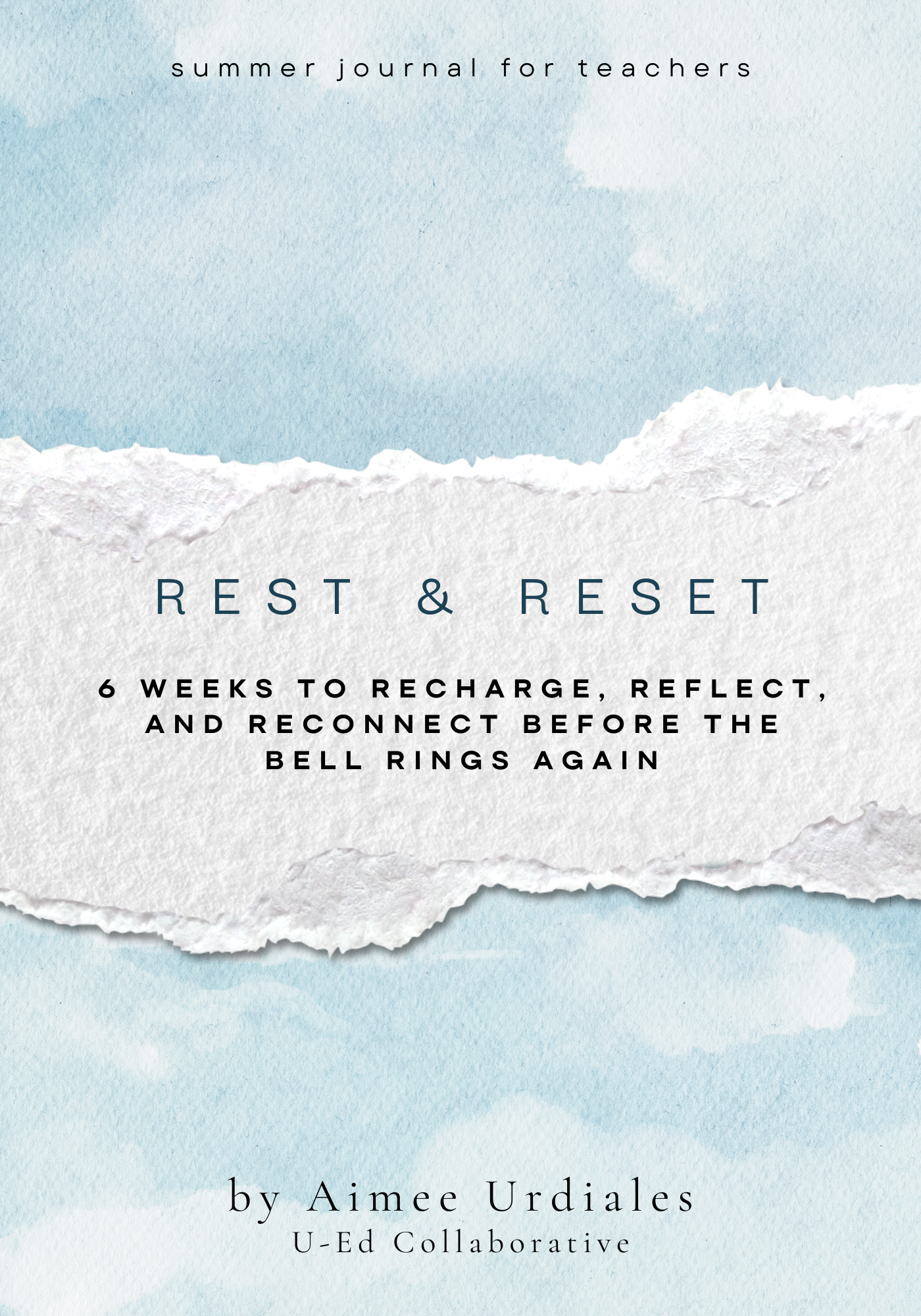
About halfway through summer, it hit me that I wanted other teachers to have this same small, unglamorous ritual — not another to-do list disguised as self-care, just a quiet fifteen minutes with a few honest questions and a place to answer them. That’s exactly what became Rest & Reset: A Summer Journal for Teachers. Six weeks of the same kind of prompts I’ve been scribbling through all summer, built to carry you from that end-of-year exhale into a calmer, more grounded August or September.
If you’ve been meaning to start something like this and just haven’t had the nudge, consider this it. You don’t need the perfect notebook or the perfect morning. You just need one page and fifteen minutes you didn’t think you had.
Grab your copy at u-edcollaborative.net — and if you start one page tomorrow morning, I’d love to hear about it.
The Rest & Reset Journal Cover
Want to Make Your Summer More Intentional?
If this post resonated, I made two things you're going to want to know about:
Rest & Reset: A Summer Journal for Teachers — six weeks of guided reflection prompts that walk you through your summer with intention, not pressure. Built around my R.E.S.T. Reset framework and designed to get you to August/September feeling calm, grounded, and genuinely ready.
Episode 16 of Teaching Smart, Not Hard — the real talk behind this post. Come listen — and then go do your thing. 😊
Go live your summer, my educator friend. You've absolutely earned every second of it!